

Seasonal Countryside Kitchen: A Month-by-Month UK Produce Checklist
The first week of June is a poor time to go looking for parsnips, and mid-February is hopeless for strawberries. That is not a shortage, it is the shape of the year. British produce runs on a rhythm, and cooking with it rather than against it is the single easiest way to eat well without spending much. A leek lifted after a frost is sweeter than one dug in September. A pheasant hung properly in November eats nothing like a bird bought in July. What follows is a working calendar, with storage notes and plain meal ideas for each stage.
How to use this checklist
Treat the dates as a rough map, not a rulebook. A garden in Cornwall can run a fortnight or more ahead of one in Aberdeenshire, and a cold spring will push everything back. The most reliable signal is what is actually on the tables at a farmers' market or in your veg box, not the label in a supermarket, which may simply mean the produce passed through a British packing house.
If you grow your own, keep a notebook. Note the week the first asparagus spear appears, the week the runners start cropping, the week the last tomato ripens. Two or three years of those notes will teach you more about your own patch than any calendar.
January to March: the lean, sweet months
This is root and brassica territory. Leeks, parsnips, swede, celeriac, Jerusalem artichokes, kale, January King cabbage and purple sprouting broccoli, which usually starts in late January or February. Forced rhubarb arrives from the Yorkshire sheds around the same time, pale and delicate and quite unlike the outdoor stuff. Wild garlic begins to appear in woodland from late February or March, depending on how mild the winter has been.
Game season is closing as this period begins, so this is the moment to use what is left in the freezer. Roast parsnip and celeriac soup, with the trimmings browned first, is a good use of a cold Sunday. Purple sprouting broccoli needs nothing more than a hot pan, olive oil, garlic and a couple of anchovy fillets. Poach forced rhubarb gently with a strip of orange peel and stop before it collapses.
Storage: roots keep for weeks in a cool, dark shed in a crate of sand or dry compost, or simply in the fridge drawer. Cut the leaves off before storing or they will pull moisture from the root.
April to June: green shoots and the asparagus window
British asparagus has a short season, roughly late April to the middle or end of June, and it is worth clearing space in the week for it. Snap the woody ends rather than cutting them, and eat the spears within a day or two of buying. Samphire follows in late spring and early summer, best blanched for a minute and dressed with butter and lemon.
Broad beans, peas, radishes, spring onions and salad leaves all arrive through these months, with elderflower in late May and the first strawberries shortly after. Wild garlic is abundant in April; blitz it with oil, parmesan and pine nuts and freeze in small pots for the rest of the year.
Storage: pod and blanch broad beans and peas, then freeze flat on trays before bagging so they don't clump. Soft fruit should not be washed until you are about to eat it.
July to September: stone fruit, soft fruit and the glut
Cherries, raspberries, gooseberries, blackcurrants, then plums and damsons, with blackberries free for the picking along most hedgerows from late August. Sweetcorn, tomatoes and courgettes hit their stride, and new potatoes are at their best boiled and buttered with mint. The grouse season opens on 12 August, and partridge from 1 September.
This is when the kitchen gets busy. Courgette gluts are best sliced, griddled and frozen, or turned into a chutney with onion and cider vinegar. A tomato mountain becomes passata: blitz, simmer, sieve, freeze. Blackberries freeze well on trays and are worth a second picking in case the first lot go mouldy in a warm spell.
October to December: game, orchard fruit and roots
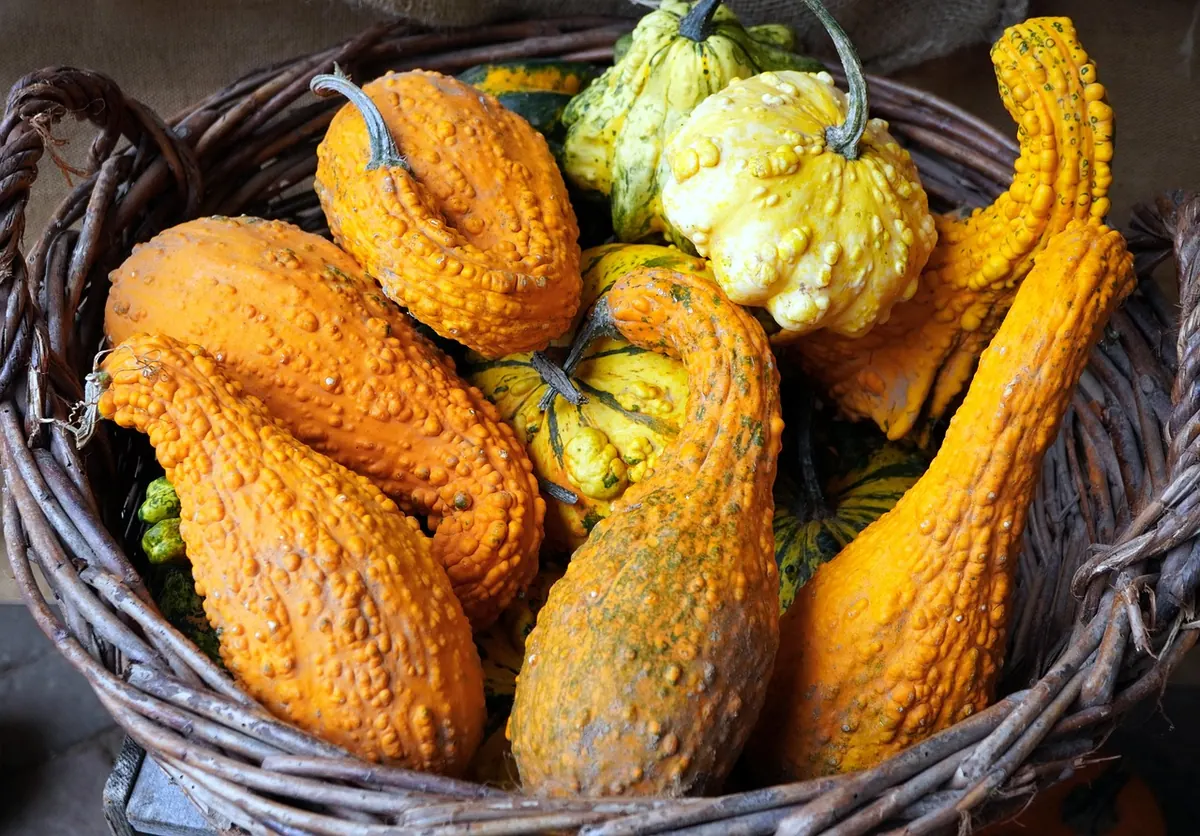
Apples, pears, quince, cobnuts and sweet chestnuts, plus the winter squash, parsnips, sprouts, leeks, kale and celeriac that will carry you through to spring. Pheasant season opens on 1 October, while grouse closes on 10 December. Venison is available across most of the year, though the season varies by species and by nation, so ask your game dealer if you are unsure.
Quince is worth the effort: slowly cooked down with sugar it becomes membrillo, which sits happily alongside cheese for months. A roast pheasant with root vegetables and a splash of cider in the tin is as good as a Sunday lunch gets. Braised red cabbage with apple and a little vinegar improves after a day in the fridge.
Storage rules that make the calendar work
- Buy less, more often. A fridge full of tired vegetables is more expensive than three trips to the shop.
- Keep roots cold, dark and dry. Damp encourages rot faster than warmth does.
- Store apples and pears away from leafy greens; the ethylene they release speeds yellowing.
- Freeze in portions you will actually use, and label with the date and what is in the bag.
- If you are unsure how to hang game, ask the dealer to do it. Hanging times depend on age, weather and condition, and getting it wrong spoils the meat.
- Cool leftovers quickly, cover them, and reheat thoroughly rather than repeatedly.
Month-by-month at a glance
- January — leeks, parsnips, kale, celeriac, forced rhubarb
- February — purple sprouting broccoli, forced rhubarb, leeks; game seasons closing
- March — purple sprouting broccoli, wild garlic, spring greens, watercress
- April — asparagus begins, wild garlic, rhubarb, radishes, spring onions
- May — asparagus, samphire, early broad beans, salad leaves, elderflower
- June — strawberries, peas, broad beans, gooseberries; asparagus finishing
- July — cherries, raspberries, courgettes, new potatoes, runner beans
- August — plums, blackberries, sweetcorn, tomatoes, grouse from the 12th
- September — apples, pears, damsons, squash, partridge, wild mushrooms
- October — apples, quince, pumpkins, parsnips; pheasant season opens
- November — sprouts, celeriac, Jerusalem artichokes, chestnuts, venison
- December — sprouts, parsnips, kale, goose, turkey; grouse closes on the 10th
Making the calendar your own
Use this as a starting point and then edit it against your own reality. Note the week your local market first has asparagus, when the damsons on your lane ripen, when the last of the squash comes in from the shed. If you shop in the same place each week, the person behind the counter will tell you what is good and what is nearly done, which is better information than anything printed.
Two habits keep it working. First, plan the week's cooking around whatever is at its best, rather than shopping for a list of recipes. Second, learn one preserving method properly — freezing, chutney or a simple brine — so that a glut becomes a pleasure rather than a panic. Seasons move quickly. Blink and the asparagus is over.
Photo: matthiasboeckel / Pixabay